Khair-ul-Jund (Army Trench Location), Karbala, Iraq – Complete History, Timeline & Significance
Khair-ul-Jund is an important but lesser-known historical location connected with the Battle of Karbala (61 AH / 680 AD). While the shrines of Imam Hussain (رضي الله عنه) and Hazrat Abbas (رضي الله عنه) are the spiritual heart of Karbala, places like Khair-ul-Jund help us understand the actual battlefield reality of Ashura.
Khair-ul-Jund is traditionally identified as an army trench / military positioning area, associated with the movement, encampment, and strategic arrangement of forces during the days leading up to the tragedy of Karbala.
This location reminds us that Karbala was not only an emotional tragedy, but also a real, planned confrontation between truth and tyranny.
Name & Meaning
Khair-ul-Jund (خير الجند)
Khair = best / chosen
Jund = army / forces
The name is preserved through local historical tradition and refers to the army-related zone of the Karbala battlefield, including areas where military forces were positioned, moved, or prepared during Ashura.
Although Khair-ul-Jund is not a shrine, it is part of the sacred geography of Karbala.
Historical Background of Karbala (With Years)
Political Situation Before Karbala
60 AH / 679 AD
Yazid ibn Muawiya demanded allegiance (bay‘ah)
Imam Hussain (رضي الله عنه) refused to support injustice
Letters arrived from Kufa requesting leadership
Imam Hussain (رضي الله عنه) chose truth over safety, knowing the consequences.
Arrival at Karbala
2nd Muharram, 61 AH
Year: 680 AD
Imam Hussain (رضي الله عنه) arrived at Karbala with:
His family
Children
A small group of loyal companions
Soon after:
Yazid’s forces surrounded the area
Military camps were set up across the plains
Areas like Khair-ul-Jund became active as army zones
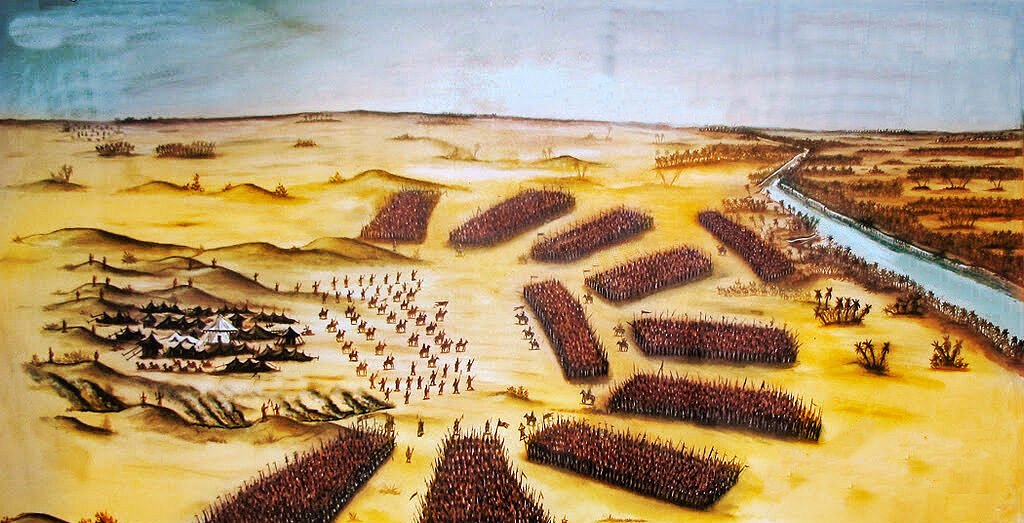
Military Build-Up & Trench Areas
7th Muharram, 61 AH / 680 AD
Key events:
Access to Euphrates River blocked
Enemy forces increased to thousands
Military formations expanded
Psychological pressure intensified
Khair-ul-Jund represents the logistical and military side of this buildup — trenches, lines, and controlled zones designed to overpower a small group.
Day of Ashura
10th Muharram, 61 AH
680 AD
On this day:
The battlefield was fully formed
Army lines were active
Strategic areas like Khair-ul-Jund witnessed movement and positioning
Imam Hussain (رضي الله عنه) and his companions were martyred
Khair-ul-Jund stands as a silent witness to the organization of worldly power against divine truth.
Why Khair-ul-Jund Is Historically Important
Khair-ul-Jund helps us understand:
Karbala as a real battlefield, not symbolism alone
The huge imbalance between the two sides
The cruelty of military tactics used
How numbers and weapons failed against moral victory
This place reminds us that truth does not need an army — it needs faith.
Spiritual & Reflective Significance
Although no specific ritual is prescribed here, pilgrims often reflect on:
ظلم (oppression) vs حق (truth)
Power without justice
Silence of the land that witnessed injustice
Responsibility of Muslims against tyranny
Khair-ul-Jund is a place of contemplation, not celebration.
Duas Commonly Recited by Visitors
There is no exclusive dua, but visitors often recite:
Salawat upon Prophet Muhammad ﷺ and Ahl-e-Bait
Dua for protection from oppression
Dua for steadfast faith
Dua for justice and courage
All supplications are made with belief that only Allah grants acceptance.
Khair-ul-Jund in Present-Day Karbala
Location: Karbala, Iraq
Region: Karbala battlefield area
Near:
Maidan-e-Karbala
Other Ashura-related sites
Today, Khair-ul-Jund is:
Preserved through historical reference
Included in Ashura heritage routes
Visited by knowledgeable pilgrims during Arbaeen
More Information for Readers
Part of Karbala’s battlefield landscape
Important for Islamic history students
Complements visits to shrines with context
Helps understand Ashura beyond emotion
Conclusion
Khair-ul-Jund teaches us a powerful lesson:
Worldly armies may occupy land, but truth occupies history forever.
While trenches were dug and forces arranged here, the final victory belonged to Imam Hussain (رضي الله عنه) — not by numbers, but by righteousness. Remembering Khair-ul-Jund deepens our understanding of Karbala and strengthens our commitment to never stand with oppression, even if it seems powerful.
Please note that this entry is provided for informational purposes only. It is imperative not to engage in praying to graves or seeking supplication through them, as this constitutes associating partners with Allah (ﷻ), which is strictly prohibited.
Related Post: Maqam-e-ashura-history
Also Read: The-battle-of-karbala-a-legacy-of-sacrifice-and-spiritual-triumph
May You Like: Al-Masjid an-Nabawi (The Prophet’s Mosque): Heart of Madinah