Roza Imam Ali (R.A.) & Sharqiyya Gate (Bab Baghdad): Complete History & Significance
The city of Najaf, Iraq, is one of the most sacred and historically rich cities in the Islamic world. At its heart stands the Roza Imam Ali (رضي الله عنه)—the shrine of the first Caliph of Islam and cousin of Prophet Muhammad ﷺ. Nearby historical routes and gates, including the Sharqiyya Gate (Bab Baghdad), played a crucial role in connecting Najaf with the political and cultural center of Baghdad.
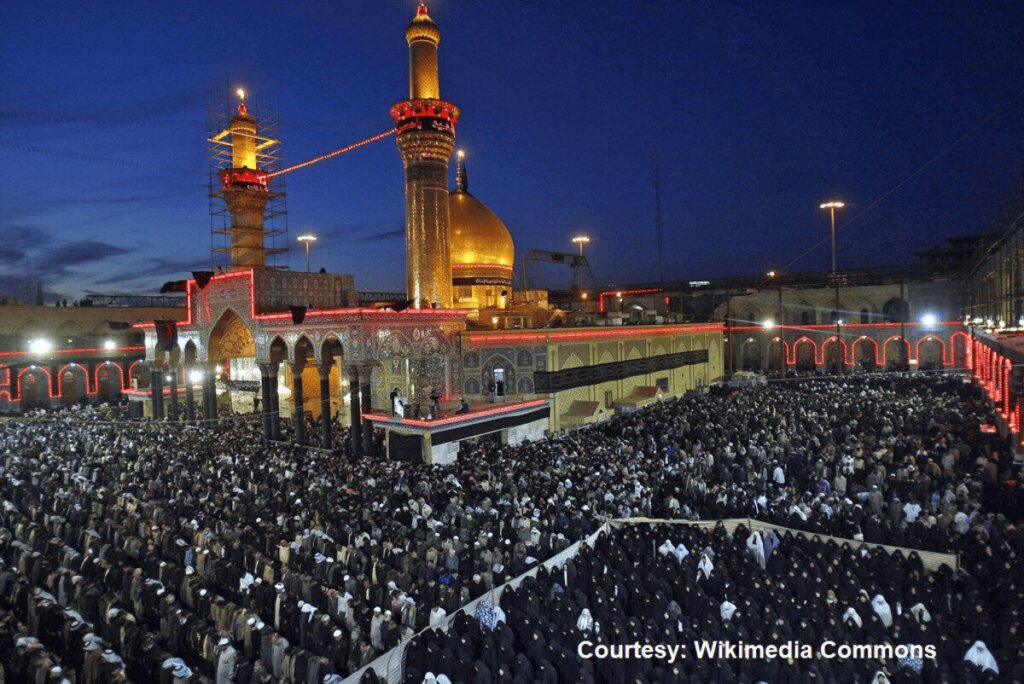
Roza Imam Ali (رضي الله عنه): Historical Background
Who was Imam Ali (رضي الله عنه)?
-
Full Name: Ali ibn Abi Talib
-
Born: 600 CE, Makkah
-
Martyrdom: 661 CE (21st Ramadan), Kufa
-
Burial Place: Najaf, Iraq
Imam Ali (رضي الله عنه) was the fourth Rightly Guided Caliph, a symbol of justice, knowledge, and courage in Islamic history.
History of the Shrine (With Years)
-
661 CE: Imam Ali (رضي الله عنه) was martyred in the Great Mosque of Kufa.
-
His grave was kept hidden for safety reasons during political unrest.
-
791 CE: Abbasid Caliph Harun al-Rashid officially identified the burial site in Najaf.
-
10th–12th century: Buyid and Seljuk rulers expanded the structure.
-
1502–1736 CE (Safavid period): Construction of the golden dome and major beautification.
-
Modern era: Continuous renovations made it one of the most visited shrines in the Muslim world.
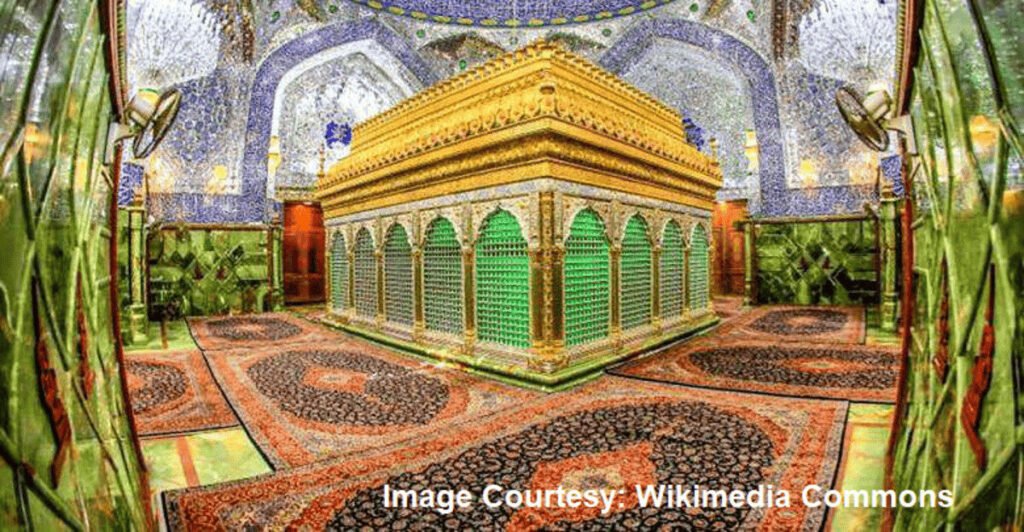
Architecture Details
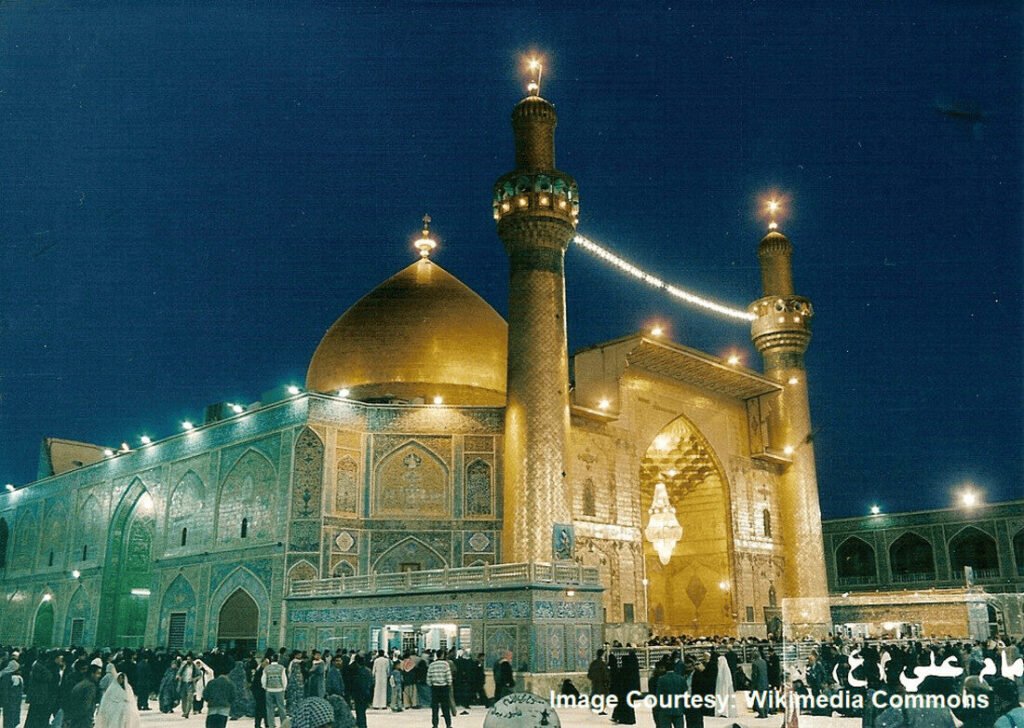
The Roza Imam Ali (رضي الله عنه) is a masterpiece of Islamic architecture:
-
A gold-plated dome visible from miles away
-
Twin minarets decorated with Quranic calligraphy
-
Large courtyards for pilgrims
-
Intricate mirror work and tile mosaics
-
Verses of the Qur’an engraved in classical Arabic script
The shrine reflects centuries of artistic contribution by various Islamic dynasties.
Wadi-us-Salaam (The Valley of Peace) ✅
Wadi-us-Salaam, located near the Roza Imam Ali (رضي الله عنه), is considered the largest cemetery in the world.
-
Burial site of prophets, scholars, and saints
-
Mentioned in Islamic traditions as a place of peace
-
Many Muslims wish to be buried here due to its closeness to Imam Ali (رضي الله عنه)
Sharqiyya Gate (Bab Baghdad): History & Importance
What is Bab Baghdad?
Sharqiyya Gate, historically known as Bab Baghdad, was an eastern gateway connecting Najaf and Kufa with Baghdad.
Historical Timeline
-
7th century CE: Used during the early Islamic period
-
656–661 CE: Active during the caliphate of Imam Ali (رضي الله عنه)
-
Abbasid era (750–1258 CE): Major route for scholars and pilgrims
-
Ottoman period: Reinforced as part of city defense
-
Today: Remembered as a symbol of Najaf’s connection to Baghdad
Religious & Cultural Significance
-
Millions of pilgrims visit Najaf annually
-
Center of Islamic learning and jurisprudence
-
Bab Baghdad symbolized political and religious connectivity
Present-Day Importance
Today, Najaf is:
-
A global center of Islamic scholarship
-
Home to major seminaries
-
A city preserved through history and faith
Conclusion
The Roza Imam Ali (رضي الله عنه) stands as a symbol of justice, wisdom, and faith, while the Sharqiyya Gate (Bab Baghdad) represents Najaf’s historical role as a bridge between spiritual and political centers of Islam. Alongside sacred sites like Wadi-us-Salaam, these landmarks continue to inspire millions and preserve the legacy of Islamic civilization.
Please note that this entry is provided for informational purposes only. It is imperative not to engage in praying to graves or seeking supplication through them, as this constitutes associating partners with Allah (ﷻ), which is strictly prohibited.
Related Post: Khair-ul-Jund (Army Trench Location), Karbala, Iraq
Also Read: Sharqiyya-gate-bab-baghdad-karbala-iraq
May You Like: Al-Masjid an-Nabawi (The Prophet’s Mosque): Heart of Madinah