Sharqiyya Gate (Bab Baghdad), Karbala, Iraq – Complete History, Timeline & Significance
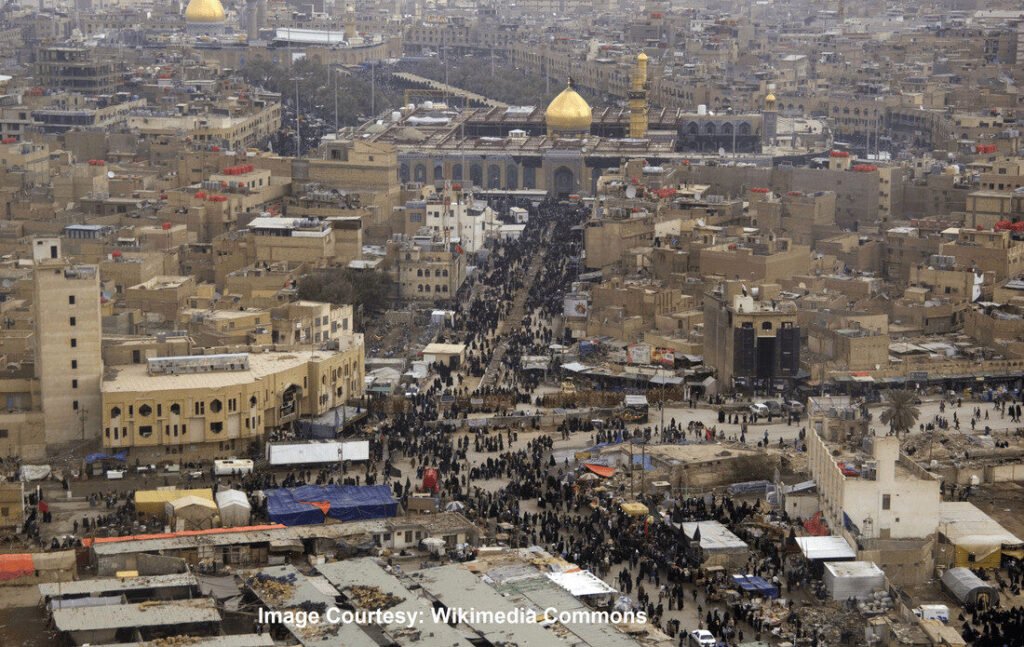
Sharqiyya Gate, commonly known as Bab Baghdad, is one of the most important historic entrance gates of Karbala, Iraq. This gate has served for centuries as the main eastern entry point for travelers, pilgrims, scholars, and traders coming from Baghdad and surrounding regions toward the holy city of Karbala.
Sharqiyya Gate is not merely an architectural structure; it is a silent witness to Islamic history, pilgrimage routes, political changes, and the spiritual movement of millions of believers who traveled toward the shrines of Imam Hussain (رضي الله عنه) and Hazrat Abbas (رضي الله عنه).
Name & Meaning
Sharqiyya Gate (باب الشرقية)
Sharqiyya = Eastern
Indicates the eastern side of Karbala
Bab Baghdad (باب بغداد)
Named because it opened toward the Baghdad route
Historically used by pilgrims traveling from Baghdad → Karbala
Both names refer to the same historic gate.
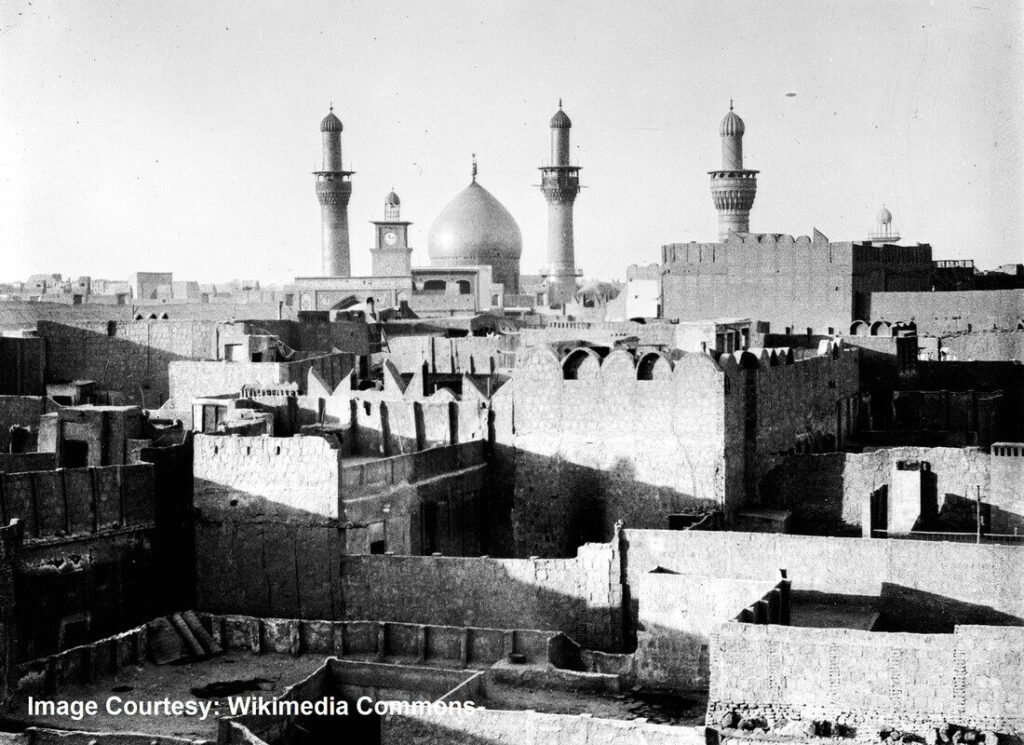
Early History of Karbala & City Gates
7th Century (680 AD / 61 AH)
At the time of the Battle of Karbala, the city was not yet fortified with large walls and formal gates. Karbala was an open plain near the Euphrates River.
After the martyrdom of Imam Hussain (رضي الله عنه), Karbala gradually developed into a permanent settlement due to increasing pilgrimage.
Development of City Walls & Gates
9th–10th Century (Abbasid Period)
Karbala began expanding
Defensive structures were introduced
Early versions of entry points were created to control access
11th–13th Century
Increased pilgrim movement from Baghdad
The eastern route became the most active
Bab Baghdad began to gain importance as a formal gateway
Ottoman Period – Major Development
16th–19th Century
Under Ottoman rule, Karbala saw major urban planning:
Construction of city walls
Strengthening of main gates
Sharqiyya Gate officially recognized as Bab Baghdad
Purpose of the Gate:
Security and city control
Pilgrim management
Trade and taxation
Protection of holy shrines
Bab Baghdad became the primary gateway for pilgrims arriving from Iraq’s capital.
19th–Early 20th Century (Qajar & Late Ottoman Era)
Karbala population increased rapidly
Pilgrimage routes were formalized
Bab Baghdad functioned as:
Pilgrim checkpoint
Entry for scholars and caravans
Cultural and economic access point
Many historical accounts mention caravans entering Karbala through Sharqiyya Gate before heading toward the shrines.
Modern Era (20th Century – Present)
Post-Ottoman Period
City walls gradually removed
Gates preserved as historical landmarks
Urban expansion reduced defensive use
Today:
Sharqiyya Gate is remembered as a heritage site
The surrounding area is part of Karbala’s historic urban zone
It remains symbolic of pilgrimage and connection with Baghdad
Religious & Cultural Importance
Sharqiyya Gate holds importance because:
It was used by millions of pilgrims over centuries
Connected Karbala with Baghdad – the heart of Islamic scholarship
Witnessed:
Ashura processions
Arbaeen pilgrimages
Scholars and travelers of Islamic history
It represents movement toward sacrifice, faith, and devotion.
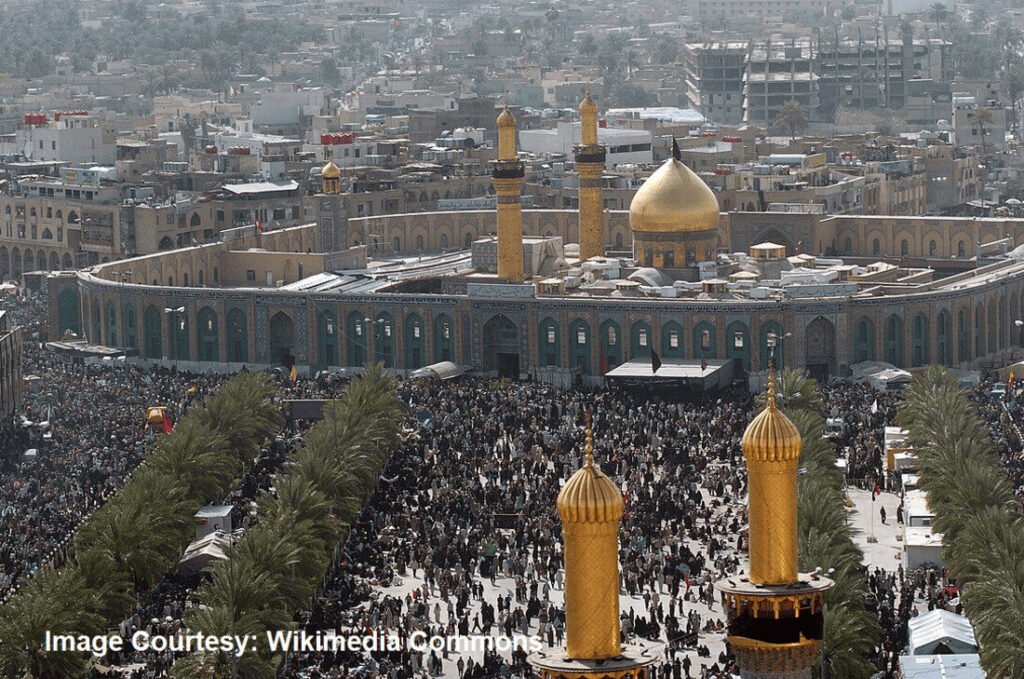
Sharqiyya Gate & Arbaeen Pilgrimage
During Arbaeen:
Pilgrims walking from Baghdad pass through routes historically linked to Bab Baghdad
The gate symbolizes the arrival point of devotion
It connects physical travel with spiritual purpose
Architectural Notes
Although much of the original structure has changed, historically the gate featured:
Thick defensive walls
Arched entrance
Guard posts
Connection to city roads leading to the shrines
More Information for Website Readers
Location: Eastern side of old Karbala
Alternate Name: Bab Baghdad
Historical Role: City entrance, security, pilgrimage control
Associated With: Baghdad–Karbala route
Best Known For: Pilgrim access and historic significance
Conclusion
Sharqiyya Gate (Bab Baghdad) stands as a powerful reminder that Karbala was never isolated—it was always connected to the wider Islamic world. Through this gate passed generations of believers, scholars, and lovers of Ahl-e-Bait, all moving toward the message of Imam Hussain (رضي الله عنه).
Though walls may fade, the spiritual legacy of Bab Baghdad remains alive, symbolizing the eternal journey toward truth, sacrifice, and faith.
Please note that this entry is provided for informational purposes only. It is imperative not to engage in praying to graves or seeking supplication through them, as this constitutes associating partners with Allah (ﷻ), which is strictly prohibited.
Related Post: Khair-ul-Jund (Army Trench Location), Karbala, Iraq
Also Read: Takht-e-Zainab (رضي الله عنها)
May You Like: Al-Masjid an-Nabawi (The Prophet’s Mosque): Heart of Madinah